
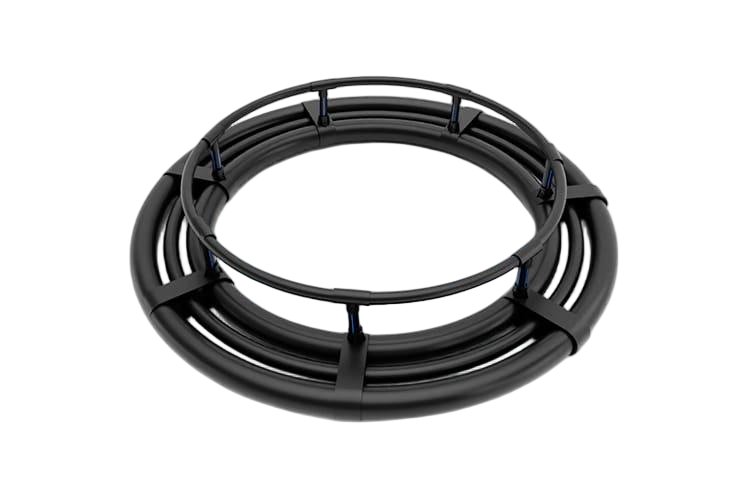
What aquaculture systems demand from pipe
Marine aquaculture is one of the harshest service environments any pipe sees: continuous salt-water immersion, UV bombardment, fouling organisms that secrete corrosive metabolites, ice damage in cold-water sites, and chemical disinfection cycles. Steel rusts in months; PVC turns brittle from UV in 2–3 years; the only material that holds up for the 15–20 year operating life of a cage is HDPE.
Why HDPE wins on aquaculture
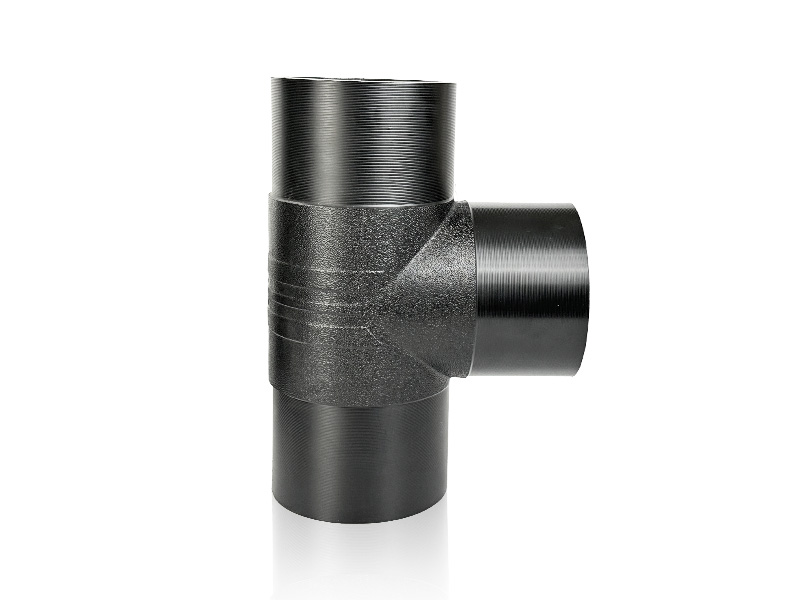
HDPE is FDA / EU / NSF certified food-contact safe and entirely inert to seawater. UV-stabilised black HDPE retains tensile strength for 25+ years of surface exposure. The same butt-fusion welding that joins land pipe joins fish-cage HDPE rings into seamless monolithic frames — there are no joints for fouling to colonise or wave-action to fatigue. Custom fabricated brackets connect rings into the hex-pattern cage geometries that Atlantic-salmon operators standardised on.
Typical aquaculture specifications
| Material grade | PE100 marine-grade with elevated UV-stabiliser load |
| Diameter range | DN160 – DN630 (cage handrail / floatation rings) |
| Pressure class | PN6 – PN10 (cages are not pressure pipes — wall thickness is set by mechanical loads) |
| Colour | Black with white UV-reflective top stripe |
| Service life | 15–25 years in marine surface service |
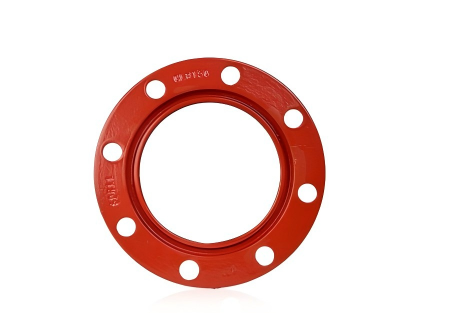
| Joining | Butt fusion, electrofusion, custom-fabricated brackets |
Recommended Primepoly products
Aquaculture project case studies
Spec-out your aquaculture cage system
Send cage dimensions, water depth, current speed, fish species and INCOTERMS to sales@primepolypipes.com — our marine-aquaculture engineers respond within one working day with cage frame design, BOM and per-cage pricing.