Guide
HDPE Pipe Installation Methods: Open-Cut vs HDD vs Pipe Bursting vs Sliplining (2026 Guide)
Open-cut, HDD, pipe bursting, sliplining — by jobsite, cost band, and SDR / PE100-RC requirement

Dr. Wei Liu, P.E.
Senior Engineering Manager · Primepoly
Published: May 15, 2026
Updated: May 15, 2026
14 min read
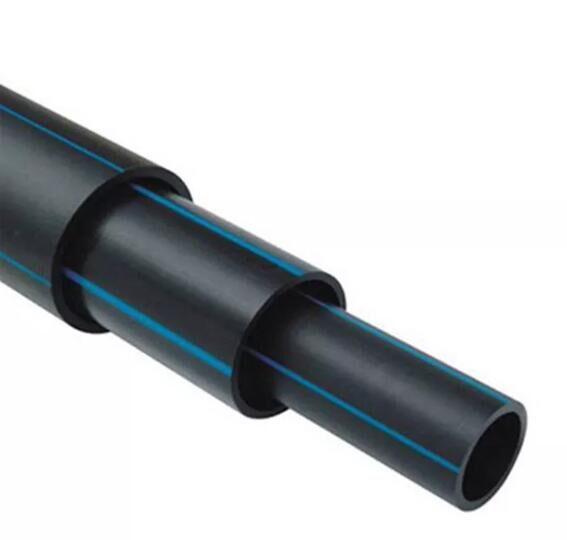
Choosing the right HDPE pipe installation method is rarely about the pipe itself — it is about the jobsite. A water main running through farmland costs nothing to dig up, while the same diameter under a city street can cost five times more to install in an open trench than to thread underground with a directional drill. This guide compares the four methods most owners and contractors actually choose between in 2026 — open-cut, horizontal directional drilling (HDD), pipe bursting and sliplining — and ends with a five-question decision flowchart so you can pick fast.
The four methods at a glance
Four installation methods account for over 90% of new HDPE pipelines worldwide. They differ in surface footprint, ground disturbance, achievable bend radius and which HDPE resin grade is recommended. The table below is the cheat-sheet you can show your project engineer in 30 seconds.
1. Open-cut (traditional trench)
The most familiar method. A trench is excavated, the HDPE pipe is laid in a sand bed (or directly on screened native backfill if the pipe is PE100-RC), then covered. Joints are butt-fusion welded above ground and the entire string is lowered as one piece for short runs, or fused stick-by-stick in the trench for long mains.
Open-cut is by far the lowest-cost option in undeveloped land — bare earth, farmland, mining right-of-way, and most rural water schemes. It loses its cost advantage once surface restoration enters the picture: asphalt patching, traffic management, dust control and disturbed-pavement reinstatement can easily add USD 200-500 per linear metre on a city street.
2. Horizontal directional drilling (HDD)
HDD bores a curved tunnel from an entry pit to an exit pit, then pulls the pre-welded HDPE string through the bore in one shot. It is the go-to method for crossing roads, rivers, railways and dense urban utility corridors. A typical municipal HDD shot is DN200 – DN500 over 50 – 400 m at depths of 3 – 15 m.
- Site survey — locate existing utilities, set entry and exit pit coordinates, design the bore profile.
- Pilot bore — a small drill bit on a steerable rod assembly follows the planned profile from entry to exit.
- Pre-ream — successive reamers enlarge the bore to 1.3 – 1.5× the OD of the HDPE pipe.
- Pull-back — the pre-welded HDPE string (often 200 – 400 m long, fused at the surface) is pulled through the bore using a swivel and pull-head.
- Hydrotest and tie-in — pressure test the new section, then fuse-tie to upstream and downstream networks at the pits.
3. Pipe bursting (replace in-place)
When an old cast-iron, ductile-iron or asbestos-cement water main reaches end of life, pipe bursting destroys it in place — a bursting head expands radially and shatters the host, while pulling new HDPE pipe through behind it. The destroyed fragments are pushed outward into the soil, leaving the new HDPE in the same alignment as the old main. Typical static-bursting equipment handles DN100 – DN800 over 50 – 300 m per shot. Pipe bursting uses ~85% less excavation than full open-cut replacement.
4. Sliplining (insert inside)
If the host pipe is still structurally sound but leaking at joints, sliplining inserts a smaller HDPE liner inside it. The new liner takes the full design pressure on its own (the host pipe is now just a casing), so you trade about 15 – 25% of the original flow cross-section for a leak-free, corrosion-free, 100-year service life. Best for old sewers, storm drains and disused gas mains where reduced bore is acceptable.
Cost comparison (USD / metre, all-in)
Numbers below are typical 2025 market rates for a DN300 HDPE PE100 SDR 17 installation, including pipe, fittings, welding, equipment, labour and surface restoration where applicable. Your project will vary ±30% depending on soil class, depth, traffic conditions and local labour rates — but the rank order is robust.
5-step decision flow
Answer these five yes/no questions in order. The first method that survives all five questions is your method. Hand this flow to the project engineer at the kick-off meeting and you will save days of back-and-forth.
5 mistakes that blow up the budget
- Specifying standard PE100 for HDD or pipe bursting — the cost saving (5 – 8%) doesn't justify the risk of slow crack failures in year 20.
- Underestimating soil class — rocky ground multiplies HDD time by 2 – 3× and standard quotes assume cohesive soil.
- Skipping the pre-bid geotechnical bore log — the single highest-ROI document on any trenchless project.
- Mixing pipe grades on the same string — never butt-fuse PE100 to PE100-RC without an electrofusion transition; mismatched MFI causes weak welds.
- Forgetting bend-radius limits — pulling HDD tighter than 200× OD permanently overstresses the outer wall.
Verdict — pick the method, then the resin
There is no single 'best' installation method for HDPE pipe — only the best method for your jobsite. The reliable shortcut is: greenfield / farmland → open-cut PE100; under roads or rivers → HDD PE100-RC; replace dying main → pipe bursting PE100-RC; restore leaky old line → sliplining PE100. The decision flow above gets you to the right answer in five questions. If you would like our engineering team to review your specific project, send a one-page brief to sales@primepolypipes.com — we will turn it around with a recommended method, SDR class, and an indicative cost-per-metre within one working day.
References & further reading
- [1]Plastics Pipe Institute — PPI Handbook of PE Pipe — Chapter 16: Pipe Bursting
- [2]PE100+ Association — PE100+ Association — Trenchless Installation Methods
- [3]International Organization for Standardization — ISO 4427 — Polyethylene (PE) pipes and fittings for water supply
- [4]International Organization for Standardization — ISO 13479 — Determination of resistance to crack propagation (notched pipe test)
- [5]ASTM International — ASTM F1962 — Standard Guide for Use of Maxi-Horizontal Directional Drilling
- [6]North American Society for Trenchless Technology — NASTT — Pipe Bursting vs. Open Cut Excavation Comparison
- [7]American Water Works Association — AWWA C906 — Polyethylene (PE) Pressure Pipe and Fittings, 4 In. Through 65 In.
- [8]Primepoly Co., Ltd. — Primepoly HDPE Water Supply Pipe — product page
Frequently asked questions
Need expert advice on your project?
Our engineering team helps utilities, contractors and EPCs specify the right pipe material and SDR for their project. Get a no-obligation technical consultation.
Talk to an engineerRead next
Explore further
Related applications, material comparisons and country buying guides selected for this topic.
Applications
HDPE pipe for water supply — trunk mains & distribution
Applications
HDPE pipe for mining — slurry, dewatering, tailings
Applications
HDPE pipe for natural gas distribution — PE80 & PE100
Comparisons
SDR 11 vs SDR 17 HDPE Pipe — Which Pressure Class for Your Project?
Markets
Saudi Arabia
Markets