Comparison
PE100 vs PE100-RC: When the 20% Premium Pays for Itself (B2B Buyer's Decision Guide)
Three numbers decide it: bore length, soil abrasiveness, install method. ROI worked example + decision flowchart.

Dr. Wei Liu, P.E.
Senior Engineering Manager · Primepoly
Published: May 15, 2026
Updated: May 15, 2026
11 min read
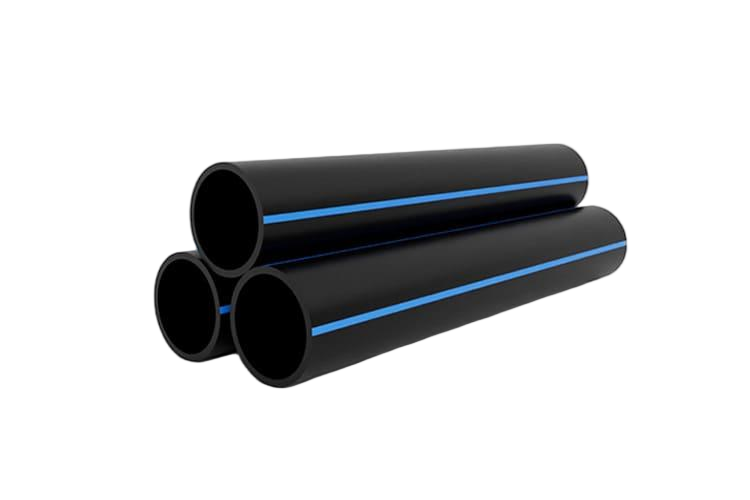
PE100-RC pipes cost 15 – 25% more than standard PE100, yet on the right project they save 30 – 50% on total installed cost. The opposite is also true: on the wrong project, the premium is dead money. This guide gives a B2B buyer the three numbers that decide it — bore length, soil abrasiveness, and installation method — plus a worked ROI example using real 2026 market prices.
What is PE100?
PE100 is the current-generation high-density polyethylene resin grade defined by ISO 4427. The '100' refers to a minimum required strength (MRS) of 10.0 MPa at 20 °C extrapolated over 50 years of continuous hydrostatic loading. PE100 replaced PE80 (MRS 8.0 MPa) in most water and gas networks during the 2000s. Today >90% of new HDPE water mains worldwide ship as PE100.
What is PE100-RC?
PE100-RC ('Resistant to Crack') is PE100 made from a specially-formulated resin with dramatically higher resistance to slow crack growth (SCG). It has the same MRS as PE100, the same wall thickness for a given SDR, and uses the same butt-fusion / electrofusion welding procedures. The only material difference is the resin formulation. The only practical difference is what happens to a small scratch over 30 years.
Spec comparison
Where the two materials are interchangeable, where they differ, and where the difference actually matters.
When PE100-RC pays for itself
Five installation scenarios where the 15 – 25% material premium typically returns 30 – 50% on total installed cost — because the labour and equipment cost of sand-bedding, careful trench cleaning, or post-installation repair drops sharply.
Worked ROI example — 500 m HDD water main
Real project economics for a 500 m DN300 SDR 17 water trunk installed by HDD under a six-lane urban road. Material prices are 2026 spot rates; labour and equipment rates are typical Tier 2 city. Numbers are USD all-in.
When PE100-RC is overkill
- Open-cut in clean, dry, cohesive soil with imported sand bed (greenfield rural water schemes) — standard PE100 was designed exactly for this, the SCG risk is already managed by the bedding.
- Above-ground pipework (factory plants, irrigation laterals, fire suppression risers) — no soil contact, no point-load risk.
- Short runs under DN90 — the absolute cost saving is small and PE100 fittings are more widely available off-the-shelf.
- Internal building plumbing — PE100-RC's benefit is for installation damage; indoor pipework is laid carefully into trays, the risk is negligible.
Decision flow — pick the resin in 5 questions
Walk these five questions top-to-bottom. First 'yes' that hits 'spec PE100-RC' ends the flow. If you reach the bottom with all no's, standard PE100 is the right call.
Verdict — match the resin to the install method
PE100-RC isn't a 'better' material than PE100 — it is a different material for a different installation environment. Specifying it correctly saves money on the right project; specifying it everywhere just inflates your material budget. The rule of thumb: if the installation method touches the pipe wall with anything sharper than smooth sand (HDD bore wall, pipe-bursting fragments, reused native backfill, slurry abrasion), spec RC. If not, save the 20% and stay with standard PE100. Email a one-line description of your project (length, DN, install method) to sales@primepolypipes.com — we will tell you which grade and why.
References & further reading
- [1]PE100+ Association — PE100+ Association — What is PE100-RC?
- [2]International Organization for Standardization — ISO 4427 — Polyethylene (PE) pipes and fittings for water supply
- [3]International Organization for Standardization — ISO 13479 — Notched pipe test for slow crack growth
- [4]DIN PAS 1075 — PAS 1075 — Pipes made of polyethylene for alternative installation techniques
- [5]PE100+ Association — The 100-Year Lifetime of PE100/PE100-RC Pipes — PE100+ Association
- [6]Primepoly Co., Ltd. — Primepoly HDPE Water Supply Pipe — product page
Frequently asked questions
Need expert advice on your project?
Our engineering team helps utilities, contractors and EPCs specify the right pipe material and SDR for their project. Get a no-obligation technical consultation.
Talk to an engineerRead next
Explore further
Related applications, material comparisons and country buying guides selected for this topic.
Applications
HDPE pipe for water supply — trunk mains & distribution
Applications
HDPE pipe for mining — slurry, dewatering, tailings
Comparisons
SDR 11 vs SDR 17 HDPE Pipe — Which Pressure Class for Your Project?
Comparisons
HDPE vs Steel for Mining Slurry Lines — Why HDPE Won the Argument
Markets
Saudi Arabia
Markets